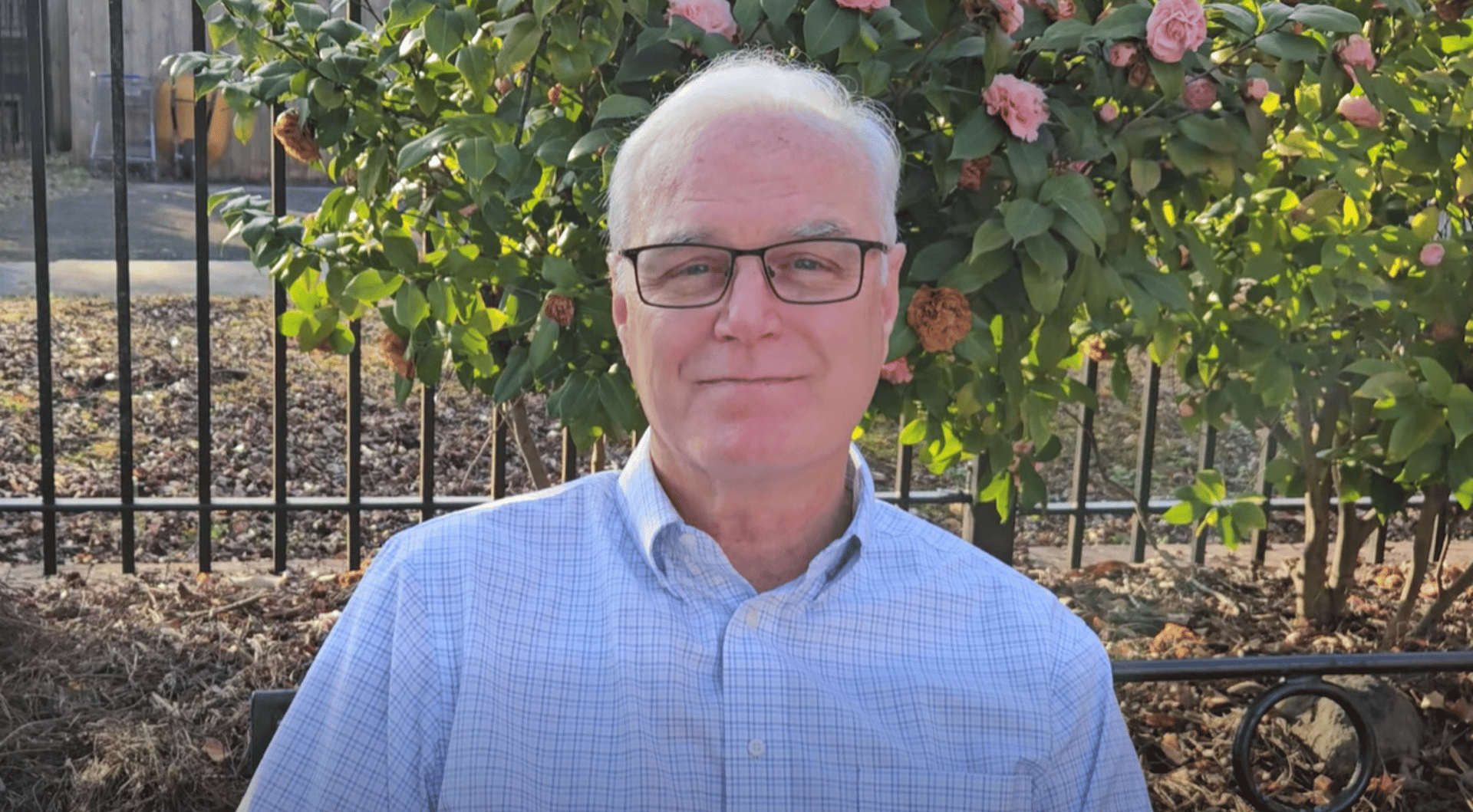
In early 2026, I signed up to run in the special election to replace Marjorie Taylor Greene. You may recall that she had moved to Rome, Georgia. I now understand that she actually lives on the road where I grew up. After I signed up, several top Democratic Party officeholders made it clear that they had no interest in any candidate other than the one they favored. People in my own circle didn't want me to run either, for reasons ranging from the expense to what they saw as the dangers of returning to politics.
I found myself in a position where I couldn’t really campaign. I took it day by day, but in the end, I mostly made videos for the internet and attended most of the forums. I spent about $100 on Facebook ads, and that was it. It would have been an uphill battle to make an impact, but I would have liked the chance to try.
One Democratic candidate was receiving millions of dollars from out of state. Most Democrats wanted everyone to get behind him because they believed he had the best chance of beating the Trump-endorsed Republican. That made sense, but he wasn’t very progressive or outspoken on the issues I cared about. He did run a good, textbook campaign built around his image. In the end, the Republican won, and I finished sixth in a field of about 18 candidates.
I found that I was rustier at politicking than I had expected, and I think the electorate has changed over the years, too. It was a difficult time, but things are somewhat better now. Most of my circle is intact again, though not all. Today, I continue to write about proposals that I believe would address our biggest public ills.
During that race, I was surprised by how few people were interested in issues. Issues are what I am about. I'm not really into political parties or conservative or liberal labels. Nor do I want to discuss communism, socialism, or other things organized interests use to divide rank-and-file citizens. I am interested in promoting a middle-class agenda. I focus on concerns consistently reflected in surveys, such as the desire for a living wage and lower healthcare costs.
I write books in my retirement, and I have a new one coming out soon. The publisher always has the last say on the title, but I have named the book "The New American Revolution." Here is the book's table of contents:
Table of Contents
Introduction- A New Social Contract
Chapter 1- The Graduated Flat-Rate Income Tax
Chapter 2- Indexing the Minimum Wage
Chapter 3- Building a Worldwide Middle Class
Chapter 4- Work Partnerships in Large Corporations
Chapter 5- Ending Predatory Household Debt
Chapter 6- Massive Conglomerates Must be Broken Up
Chapter 7- Optional Universal Healthcare System
Chapter 8- A Federal Balanced-Budget Requirement
Chapter 9- A One-to-Five Percent Wealth Tax
Chapter 10- A Limit on Government Taxation
Chapter 11- Paying Off $1.7 Trillion Student Debt
Chapter 12- Providing the Basics at Home
Chapter 13- Enabling the Basics at Aboard
Chapter 14- The Age-old Problem of War
Chapter 15- Enabling Housing Security
Chapter 17- Recapturing Democracy
Conclusion- What This Social Contract Achieves
Here are the key points of the book:
What This Social Contract Achieves
As a species of people, let us remake ourselves into a people with money in our pockets, time on our hands, peace in our hearts and prosperity in our countries. Here is what this proposal package achieves:
· This package raises an estimated $2.0 trillion to $2.2 trillion in annual positive revenue through a no-loophole graduated flat income tax and a wealth tax on the richest Americans. After market effects, the plan is expected to result in at least $1.6 trillion to $1.9 trillion in new revenue.
· Balances the federal budget in the first year and begins paying down the national debt, with a goal of retiring it in 16 years.
· Requires no new taxes on working-class or middle-class households: households under $250,000 remain protected at their 2019 baseline levels.
· Raises the minimum wage to $23.80 per hour, putting money into workers’ pockets, giving everyone a living wage, and moving millions of people off welfare.
· Reduces the taxpayer cost of welfare by moving working people above eligibility, with earlier estimates showing about $142 billion per year in combined SNAP savings, housing-assistance
savings, and added payroll and income-tax receipts.
· Through a worker-owner partnership, it gives workers a 25% share of large-corporation prosperity. Money in the pockets of local workers. Money they may spend back into the community.
· Caps mortgage rates at 3.99% and revolving credit at 4.99%, with additional consumer protections that keep debt from becoming a permanent trap.
· Creates a voluntary full-coverage universal healthcare system with a 5% employee payroll cap, $50 office visits, a $1,000 annual out-of-pocket cap, and a $10,000 lifetime maximum. It has full coverage including dental, vision, and hearing.
· Ends poverty as a permanent class by funding a national poverty-eradication system built around standard housing, nutrition, job placement, supportive care, and a $215 billion first-year appropriation.
· Builds a worldwide middle class by using U.S. market access to lift workers worldwide through a certification system requiring three-times the poverty level at home and an equivalent living wage abroad. This focuses the world on the labor dollar assuring the U.S. of retaining the US dollar as the world currency.
· Redirects military resources away from permanent war and toward territorial defense, disaster response, infrastructure, medical logistics, and humanitarian security.
· Expands candidate access to voters through ranked voting and a nationwide Sunday debate and airtime program during election season, funded by a 10% surcharge on FCC licenses.
· It secures Social Security for the next 75 Years through removing the Social Security ceiling so high-income earners will also pay the 6.2 percent employee payroll tax.
· Major recurring revenue in the wealth-tax model of $1.6 trillion/year to recoup past losses and make a debt free future for Americans.
· Student Debt Resolution taking care of a 1.7 trillion dollars drag on the economy.
· It eliminates most renter evictions through a Renter Security Fund to cover renters who lose their job, become ill or hospitalized, and during bereavement.
· Provides for poverty eradication and housing appropriation at home and a global human survival floor for basic needs both at home and abroad.
Community Investment and Social Infrastructure Fund that covers domestic public priorities including pre-K, childcare, school meals, rural broadband, elder care, free trade schools, and apprenticeships, and restores emergency services.
Year One Math:
+$1.6 trillion wealth-tax revenue
+$500 billion graduated flat-rate income/corporate reform revenue
+$262.5 billion student-debt debt-reduction share
+$1.94 billion renter-fund annual surplus
-$440 billion Community Investment and Social Infrastructure Fund
-$215 billion poverty startup cost
-$500 billion global basic-needs commitment
-$5 billion housing appropriation
-$2.541 billion renter-fund seed cost
The result is an estimated positive Year one reserve of about $1.202 trillion. After all currently quantified package items are deployed, the estimated Year 1 result is a positive federal balance of approximately $1.202 trillion. In later years, after one-time startup costs fall away, the package remains strongly positive under the same assumptions, while the Community Investment and Social Infrastructure Fund continues to support visible domestic renewal.
The Acts are not separate wish-list programs. They are designed as one working fiscal and social system: revenue from concentrated wealth, speculation, and from closing tax loopholes will fund poverty eradication, debt reduction, housing stability, healthcare security, education relief, and global basic-needs commitments while still leaving a substantial positive balance under the stated assumptions.
The remaining surplus should not be treated as idle money or a license for unlimited new programs. It is a national stabilization reserve to absorb economic shocks, prevent future deficits, cushion recessions, and keep the new social contract solvent without raising income taxes on working- or middle-class households.
Readers who support these reforms should not stop at agreement. Review the Acts, organize with others, support candidates who will fight for this package, use the Supporter Advocacy Letter, and press Congress to act. These proposals become real only when citizens move together.
Thank You,
Jim Davis, 2026
I have other books on the same subject at jimdavisbook.com
I also post occasionally at "Peace and Progress" on Facebook.
Direct Email-
www.jimdavistmc@hotmail.com